
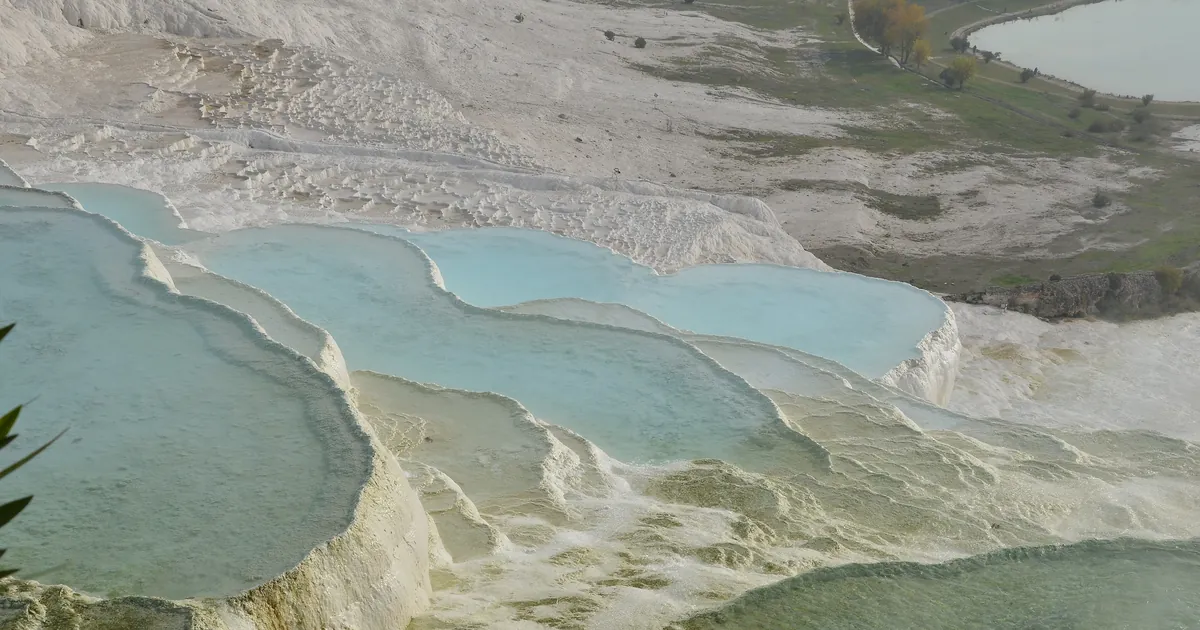
North of Denizli, with snow-white terraces spilling down a hillside and turquoise pools, Pamukkale is one of Turkey's best-known natural wonders. Right above it lie the theatre, streets and tombs of Hierapolis, a great spa city of the Roman era. In this guide you will find how to explore Pamukkale and Hierapolis, the best time to go and how to reach Pamukkale by VIP transfer from Izmir, Denizli or the Aegean resorts.
How were the Pamukkale travertines formed?
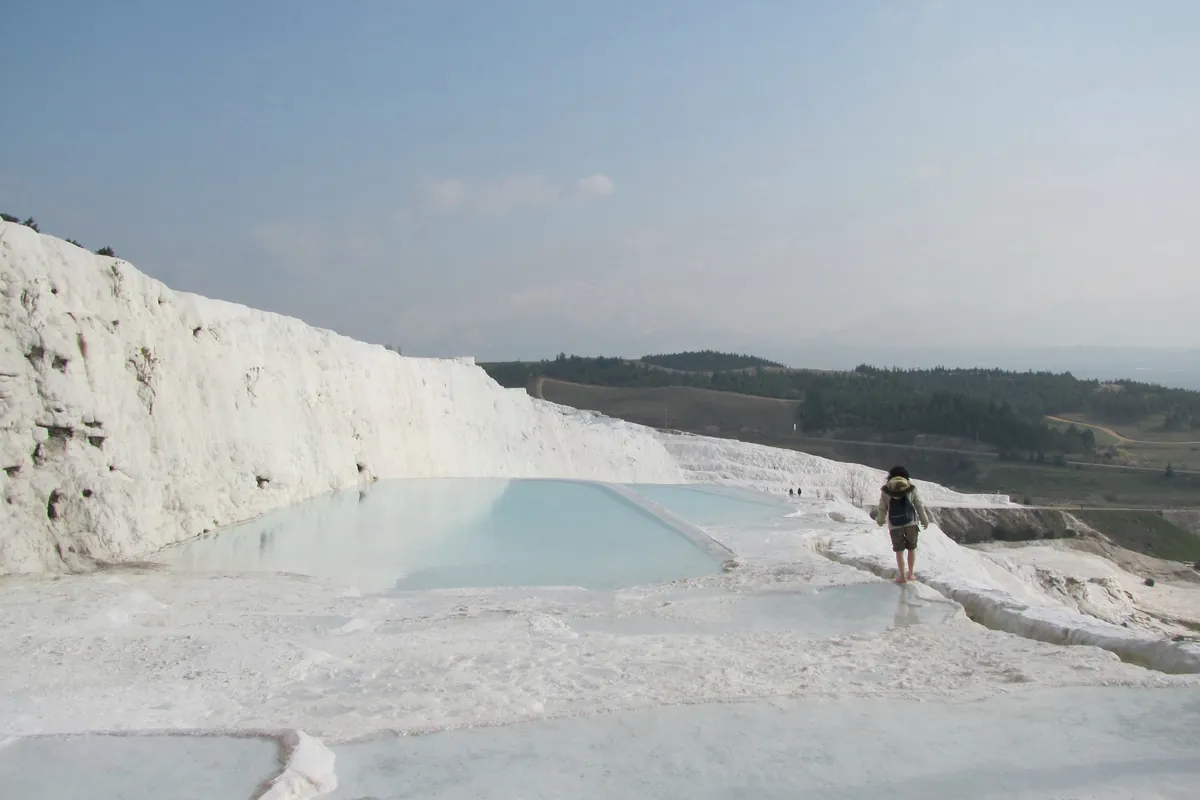
Pamukkale's white terraces formed over thousands of years as thermal water rich in calcium bicarbonate flowed down the slope and left limestone behind on contact with the air. As the water cooled, the deposits built up into stepped pools and frozen cascades; from afar the hillside looks like a cotton field, which is what the name means.
To protect the travertines you may walk on the terraces only barefoot. Walking through the water and dipping your feet in the shallow pools is allowed, but some sections are closed for conservation and you should follow the guards’ instructions.
What to see in Hierapolis
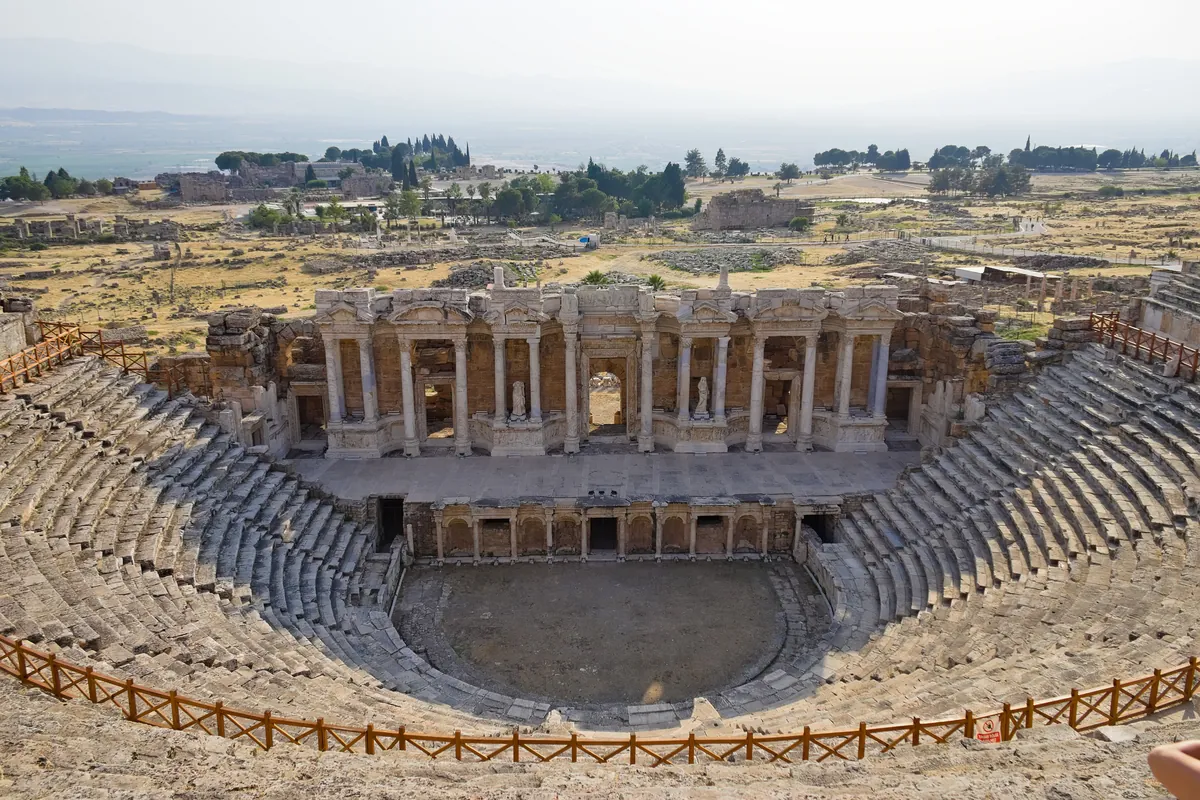
Above the travertines, Hierapolis was founded in the 2nd century BC and became famous in Roman times for its healing waters. Walking around the site you soon realise how large the city was.
- The ancient theatre: Set into the hillside, with its carved stage building it is one of the best-preserved theatres in Anatolia.
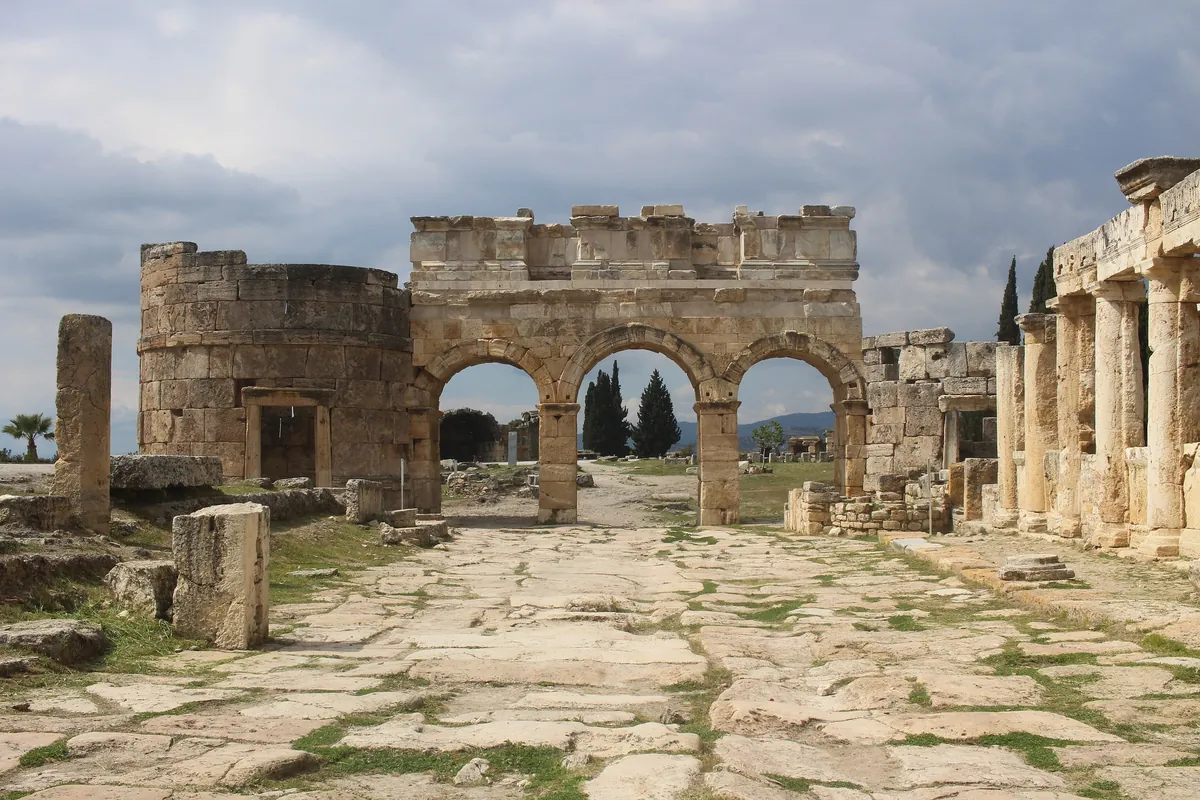
- Frontinus Street and Gate: The main street and its three-arched monumental gate bring the Roman city plan to life.
- The necropolis: The vast cemetery at the city entrance, with hundreds of sarcophagi and tombs from different periods, is one of the largest in Anatolia.
- Hierapolis Archaeology Museum: Housed in the Roman baths, it displays statues and sarcophagi found in the city.
The Antique Pool (Cleopatra’s Pool)
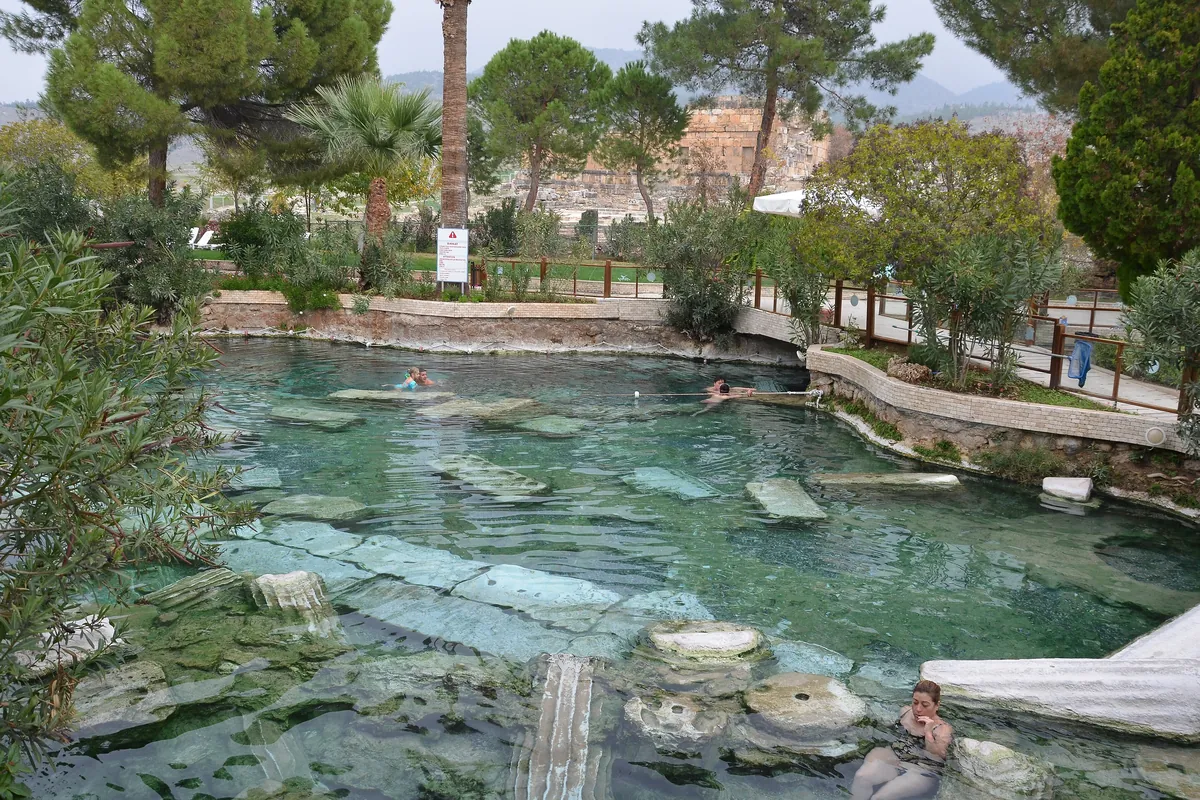
In the Antique Pool at the heart of the site you can swim in warm thermal water among Roman columns that fell into it in an earthquake. The pool has its own entrance and a separate fee; bring a towel, swimsuit and flip-flops.
When to visit Pamukkale
Pamukkale is open all year, but spring and autumn are the most comfortable seasons. Because the white travertines reflect the sun, summer middays are both hot and dazzlingly bright.
- Spring (April–June): Mild weather, green Hierapolis and the best temperatures for walking.
- Summer (July–August): Very hot and crowded; go early in the morning or towards sunset.
- Autumn (September–November): Cooler air, fewer crowds and soft light; ideal for walking the travertines.
- Winter (December–March): Quiet, steamy scenery; but the water and stone are cool and days are short.
At sunset the travertines turn pink and orange, the best time for photos. Avoiding the midday hours when tour coaches arrive makes the visit far more enjoyable.
Tips for Pamukkale
- Arrive early. The first hours are cool and quiet; you start before the tour groups.
- Be ready to take off your shoes. You walk barefoot on the terraces; bring a small bag for your shoes.
- Sun protection is a must. White stone reflects the sun; use a hat, sunglasses and sunscreen.
- Start at the top. Entering through the north or south gate, seeing Hierapolis first and then walking down the travertines is less tiring.
- Watch your step. Wet travertine is slippery in places and rough in others; walk slowly.
- Bring a swimsuit. If you want to swim in the Antique Pool, bring a swimsuit and towel.
Entrance fees, opening hours and open sections can change; check the latest information from Turkey's Ministry of Culture and Tourism before you go.
How to get to Pamukkale: VIP transfer options
The nearest airport is Denizli Çardak (DNZ), and the large airport with the most flights is Izmir Adnan Menderes (ADB). Pamukkale is also a popular day trip for holidaymakers in Kuşadası, Bodrum or Fethiye. With a VIP transfer we pick you up at your hotel or the airport, wait while you explore and bring you back the same day; you spend the long drive relaxing in the back seat.
VIP transfer from the nearest points
Our VIP vehicles
 Mercedes Vito VIPUp to 5 passengers · 5 large suitcases · driver and fuel included
 VIP SprinterUp to 7 passengers · 7 large suitcases · for groups and plenty of luggage
VIP transfer to Pamukkale from the Aegean and the Mediterranean
A day trip to Pamukkale and back is possible from Kuşadası, Bodrum, Dalaman and Antalya. From Ankara and Istanbul it is much faster to fly to Denizli or Izmir and take a transfer from there.
| From | Distance | Time | Current price |
|---|---|---|---|
| AydınKuşadası cruise port | 195 km | ~2 h 8 min | Get a price → |
| MuğlaMilas-Bodrum Airport (BJV) | 259 km | ~3 h 4 min | Get a price → |
| MuğlaDalaman Airport (DLM) | 211 km | ~3 h 9 min | Get a price → |
| AntalyaAntalya Airport (AYT) | 248 km | ~3 h 31 min | Get a price → |
| AnkaraAnkara Esenboğa Airport (ESB) | 509 km | ~6 h 32 min | Get a price → |
| IstanbulIstanbul Airport (IST) | 628 km | ~7 h 1 min | Get a price → |
- Kuşadası cruise port: Day trips to Pamukkale for cruise passengers and Kuşadası hotels.
- Antalya Airport (AYT): A long day; we recommend an early start.
When you click Get a price, a window opens with the route already filled in; you see the current estimated price for Vito VIP and Sprinter and can book without leaving the page. Prices are per vehicle and follow the current fuel price; the licensed carrier taking the transfer confirms the final price. To see Pamukkale together with Laodicea or Karahayıt on the same day, choose Private Hire in the booking form.
Places to see near Pamukkale
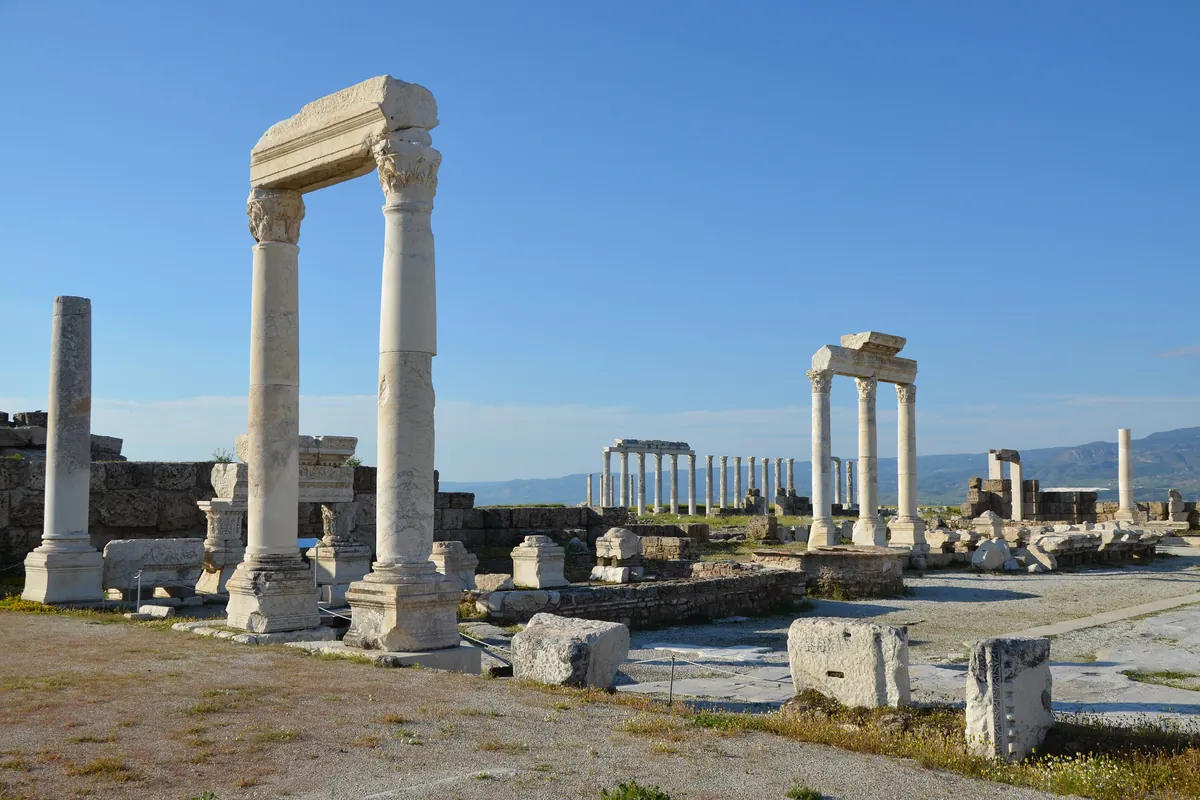
- Laodicea: About 15 minutes from Pamukkale; with its colonnaded streets and theatres, one of the largest ancient cities in the region.
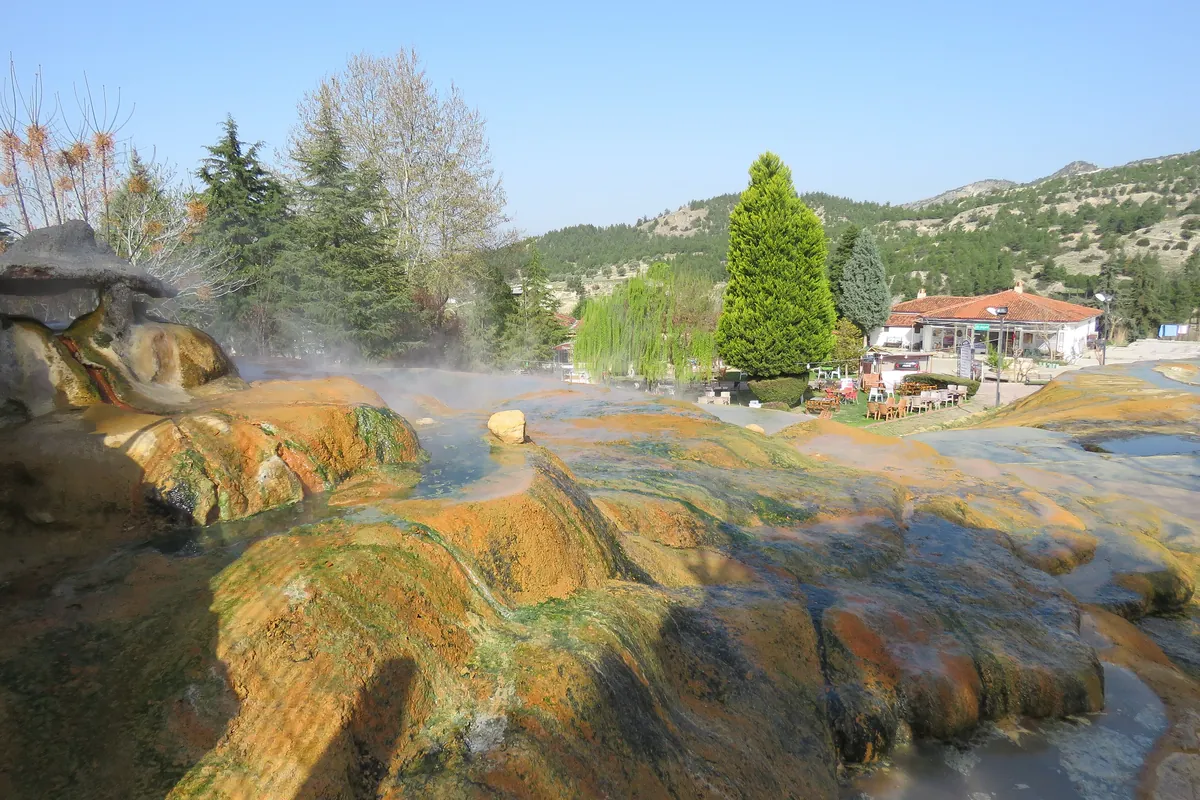
- Karahayıt Red Spring: A spa village a few kilometres north of Pamukkale where iron-rich thermal water stains the rock red.
- Paragliding: Tandem flights over the travertines and Hierapolis are one of the most popular experiences here.
- Kaklık Cave: A small cave with travertines inside, on the Denizli–Afyon road.
Frequently asked questions
How long does it take to visit Pamukkale?
Allow at least 3–4 hours for the travertines and Hierapolis. If you want to swim in the Antique Pool and see the museum, you will need more than half a day.
Can you wear shoes on the Pamukkale travertines?
No. To protect the travertines you walk barefoot on the terraces. In the Hierapolis ruins you can wear your shoes.
How long does it take from Izmir to Pamukkale?
From Izmir Adnan Menderes Airport to Pamukkale it is about 228 km, around 2 h 24 min.
Can you visit Pamukkale on a day trip from Kuşadası?
Yes. From Kuşadası port it is about 195 km and 2 h 8 min; leave early in the morning and you will be back at your hotel in the evening.
Is there a separate fee for the Antique Pool?
Yes, the Antique Pool is charged separately from the site entrance. Check the current fees before you go.
Ready to see the white terraces of Pamukkale and Hierapolis? Leave the road to us. Plan your transfer now.